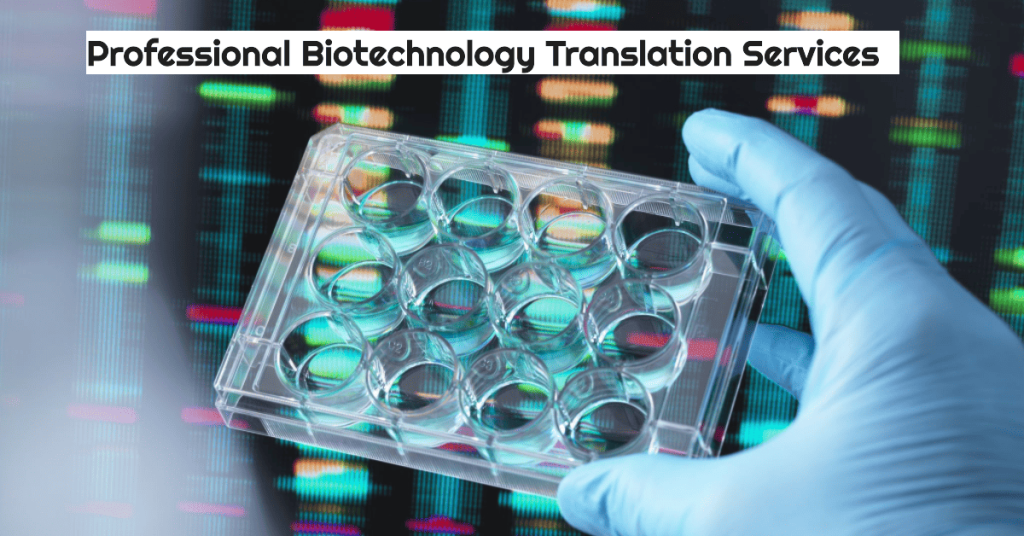
Professional Biotechnology Translation Services for Accurate Communication
In an increasingly globalised world, biotechnology companies operate across borders and cultures, making effective communication crucial.
Professional biotechnology translation services play a pivotal role in ensuring that information is accurately conveyed among diverse audiences.
This article delves into the essence of biotechnology translations, their significance in the industry, and the best practices for successful translation projects.
What are Biotechnology Translation Services?
Understanding Biotechnology Translations
Biotechnology translation services encompass the conversion of documents and materials related to the biotech field from one language to another.
This includes a range of documents such as clinical trial protocols, research articles, regulatory submissions, patents, and marketing materials.
The complexity of biotechnology translations lies in the specialised terminology and technical jargon specific to the life sciences sector.
Thus, having a translator with a thorough understanding of both the language and the industry is essential for achieving translation accuracy.
Importance of Accurate Translation in the Biotechnology Industry
In the biotechnology industry, accurate translation is not just a matter of preference; it is a necessity.
Misinformation or misunderstanding due to poor translations can lead to serious consequences, including regulatory compliance issues, failed clinical trials, and ultimately, harm to patients.
Companies engaged in global biotech operations must ensure that their documents convey the intended message without ambiguity.
An accurate translation safeguards the integrity of scientific research and helps maintain the credibility of biotech companies in the eyes of stakeholders, regulatory agencies, and the public.
Types of Biotechnology Documents Requiring Translation
The scope of biotechnology documents requiring translation is vast.
Key document types include clinical trial documentation, which must be precisely translated to ensure that all parties involved understand the study protocols and requirements. Regulatory documents, vital for compliance with international laws, also necessitate accurate biotech translation.
Additionally, marketing materials, product information leaflets, and educational resources must be localised to resonate with target audiences. Each of these documents serves a crucial function within the biotech industry, emphasising the need for professional translation services.
Why Should You Use Professional Biotechnology Translation Services?
Benefits of Expert Translation in Biotech
Utilising professional biotechnology translation services offers several advantages. Firstly, expert translators possess specialised knowledge in both the biotechnology field and linguistic nuances.
This expertise ensures that technical terms are appropriately translated, preserving their meanings across languages.
Secondly, collaboration with a skilled translation team can expedite the translation process while maintaining high-quality standards.
Moreover, professional translation services often provide additional resources such as translation memories, which enhance consistency and accuracy across multiple projects.
How Professional Biotechnology Translations Enhance Communication
Effective communication is crucial in the biotech sector, where precise information transfer can impact research outcomes and business success.
Professional biotechnology translations enhance communication by providing clear and concise translations that are culturally relevant.
This is particularly important when dealing with diverse stakeholders, including regulatory bodies, healthcare professionals, and patients.
By ensuring that all parties have access to accurate information, biotech companies can foster collaboration and promote understanding across linguistic barriers.
Choosing the Best Biotechnology Translation Services
Selecting the best biotechnology translation services involves careful consideration of several factors.
Prospective clients should look for translation agencies with a proven track record in the biotech industry.
Reviewing client testimonials and case studies can provide insight into the agency’s ability to deliver high-quality translations.
Additionally, it is essential to verify the qualifications of the translators and the agency’s adherence to industry standards.
Ultimately, the right translation provider will be one that understands the intricacies of biotech and is committed to delivering exceptional translation solutions.
How to Select the Right Translator for Your Biotechnology Documents?
Key Qualities to Look for in a Biotechnology Translator
When selecting a translator for biotechnology documents, several key qualities should be prioritised.
Firstly, the translator should have a robust understanding of the biotech industry, including familiarity with relevant terminology and concepts.
This specialised knowledge enables the translator to convey complex ideas accurately. Secondly, cultural competence is crucial, as translations must be sensitive to the cultural context of the target audience.
Lastly, a commitment to quality assurance and an understanding of the translation process are essential traits that ensure the final product meets the highest standards.
Evaluating Experience in the Biotech Industry
Experience in the biotech industry is a significant criterion when evaluating potential translators.
Translators who have worked on projects within the life sciences sector will have a better grasp of the intricacies of biotechnology documents.
It is beneficial to inquire about previous projects, the types of documents translated, and any relevant certifications.
This background knowledge helps to ensure that the translator can navigate the complex terminology and nuances inherent in biotech translations.
Understanding Certifications for Biotechnology Translation
Certifications can serve as a valuable indicator of a translator’s qualifications and expertise.
Many professional translators hold certifications from recognised organisations, demonstrating their commitment to maintaining high standards in their work.
Certifications specific to translation and localisation within the biotech field indicate that the translator is equipped to handle the unique challenges associated with biotech translation projects.
By choosing certified translators, companies can enhance their confidence in the quality and accuracy of the translations they receive.
What are Common Challenges in Biotechnology Translations?
Overcoming Technical Jargon in Biotechnology Documents
One of the most significant challenges in biotechnology translations is overcoming the technical jargon that permeates the field.
Biotechnology documents often contain specialised vocabulary that may not have direct equivalents in other languages.
Professional translators must not only translate the words but also interpret the underlying concepts accurately. This requires a deep understanding of both the source and target languages, as well as the subject matter.
Utilising glossaries and reference materials can aid translators in overcoming these challenges, ensuring that the translations maintain their intended meaning.
Ensuring Cultural Sensitivity in Biotech Translation Projects
Cultural sensitivity is paramount in biotechnology translation projects.
It is essential for translators to be aware of cultural differences that may impact how information is perceived.
For instance, certain terms or phrases may carry different connotations in various cultures, which can lead to misunderstandings if not handled appropriately.
Professional translators are trained to recognise and navigate these cultural nuances, ensuring that translations are not only accurate but also culturally appropriate, thereby enhancing the effectiveness of communication in the global biotech landscape.
Dealing with Evolving Terminology in the Biotechnology Field
The biotechnology field is characterised by rapid advancements and evolving terminology. New discoveries and innovations can introduce new terms or alter the meanings of existing ones.
Professional translation services must stay abreast of these changes to ensure that their translations remain current and relevant.
This often involves ongoing education and collaboration with subject matter experts. By maintaining a dynamic approach to language translation, translation agencies can provide biotech companies with up-to-date and accurate translations that reflect the latest developments in the industry.
What are the Best Practices for Biotechnology Translation Projects?
Steps to Initiate a Successful Biotechnology Translation Project
Initiating a successful biotechnology translation project involves several critical steps.
First, a detailed project brief should be created, outlining the specific requirements, target audience, and desired outcomes.
Engaging stakeholders early in the process ensures that their input is considered, leading to a more comprehensive understanding of the project objectives.
Next, selecting the appropriate translation team is crucial, as this will influence the overall quality of the translation.
Establishing clear timelines and communication channels will facilitate a smooth workflow throughout the translation process.
Quality Assurance in Biotech Translation Services
Quality assurance is a cornerstone of effective biotechnology translation services. Implementing a rigorous quality assurance process ensures that translations meet established standards of accuracy and consistency.
This may involve multiple rounds of review, editing, and proofreading by qualified linguists. Additionally, employing translation memories can enhance consistency across projects, allowing translators to reference previously translated content.
By prioritising quality in biotech translations, companies can mitigate risks associated with miscommunication and enhance their reputation in the industry.
Utilising Modern Technology in Biotechnology Translations
Modern technology plays a pivotal role in enhancing the efficiency and accuracy of biotechnology translations.
Tools such as translation software and localisation platforms facilitate the translation process, allowing for greater collaboration among translators and clients. Moreover, the use of translation memories and glossaries can significantly improve consistency and reduce turnaround times.
By leveraging these technological advances, biotechnology companies can streamline their translation projects, ensuring that they remain competitive in the fast-paced global market.
Professional Biotechnology Translation Services Company in Singapore
In conclusion, leveraging professional biotechnology translation services is a critical strategic move for biotech companies, research institutions, and life sciences organisations looking to operate globally, maintain compliance, and accelerate innovation.
In an industry where precision, regulatory accuracy, and scientific integrity are non-negotiable, moving beyond basic translation to comprehensive localisation is essential.
This ensures that all content—from research documentation and clinical trial materials to regulatory submissions, training resources, and digital platforms—is not only linguistically accurate but also scientifically precise and aligned with regional regulatory standards.
This specialised, detail-driven approach significantly improves knowledge transfer, regulatory approval success, and stakeholder trust, while reducing risks associated with misinterpretation, non-compliance, or data inconsistency across global markets.
Why Choose WhizWordz Biotechnology Translation Services?
WhizWordz distinguishes itself by combining deep biotechnology expertise with rigorous quality controls and efficient, technology-driven workflows.
Biotechnology & Scientific Expertise
At WhizWordz, we do more than translate technical language. Our native linguists are subject-matter experts with backgrounds in biotechnology, pharmaceuticals, life sciences, and medical research. This ensures accurate use of complex terminology, preservation of scientific meaning, and adherence to industry standards—especially critical in highly regulated environments such as clinical research, genomics, and biopharma.
Advanced Translation Technology
We utilise proven translation technologies, including Translation Memory, terminology management systems, and secure workflows, to ensure consistency across large-scale projects, accelerate turnaround times, and optimise costs—while maintaining strict quality and confidentiality requirements.
End-to-End Biotechnology Localisation
WhizWordz provides a comprehensive range of services, including technical document translation, regulatory and clinical trial localization, transcription, multilingual subtitling, and desktop publishing (DTP). From early-stage research documentation to global product launches, we manage the entire localisation lifecycle and deliver content that is accurate, compliant, and ready for international deployment.
WhizWordz is your trusted biotechnology translation partner—dedicated to transforming complex scientific content into clear, compliant, and globally accessible communications that support innovation and drive organisational success.
Frequently Asked Questions (FAQs)
Q1:What are professional biotechnology translation services?
A: Professional biotechnology translation services involve the translation of biotech documents, which may include research papers, regulatory documents, clinical trial reports, and marketing materials, ensuring accuracy and compliance with industry standards.
Q2:Why is certified translation important for biotech documents?
A: Certified translation is crucial for biotech documents as it guarantees the accuracy and authenticity of the translated materials, which is essential for regulatory submissions and to meet the requirements of pharmaceutical companies and other stakeholders.
Q3:What types of documents do you translate in the life science sector?
A: We translate a variety of biotech documents in the life science sector, including clinical trial protocols, informed consent forms, product labels, patents, and scientific publications, ensuring that all translations meet the necessary quality standards.
Q4: What languages can you provide for biotechnology translation services?
A: Our biotechnology translation services can handle a wide range of languages, providing comprehensive translation support for projects aimed at global market expansion and ensuring that all product content and collateral terminology is accurately translated.
Typically, professional biotechnolgy translation will involve the following languages such as Simplified Chinese translation, Malay translation, Indonesian translation, Japanese translation and Korean translation. And European language will include French translation, Spanish translation, Portuguese translation, German translation
Q5:What is the process of getting my biotechnology documents translated?
A: To get your biotechnology documents translated, you can contact our team, provide the documents that need translation, and specify your requirements. Our experienced native translators will assess the materials and offer you a tailored translation solution.
Q6:Can you provide localisation services for biotechnology products?
A: Yes, we offer localisation services for biotechnology products, ensuring that all translated materials are culturally appropriate and tailored to the target market while maintaining the intended meaning and technical accuracy.
Q7:What are some common challenges in translating biotechnology documents?
A: Common challenges in translating biotechnology documents include the use of specialised terminology, the need for high accuracy due to regulatory implications, and the requirement for understanding complex scientific concepts that must be accurately conveyed in the target language.
Q8:What translation technologies do you use for biotech translations?
A: We utilise advanced translation technologies, including CAT tools and terminology management systems, to enhance the efficiency and consistency of biotech translations, while ensuring adherence to quality standards across all documents.